
As you enter your retirement years, navigating legal issues like estate planning, healthcare directives, and housing disputes can feel overwhelming and costly. You can access specialized free legal help designed specifically for seniors in every state, ensuring your rights are protected without draining your savings. The Older Americans Act mandates funding for senior legal assistance nationwide, providing you with critical retirement resources for issues ranging from Medicare appeals to consumer fraud. Whether you need to draft a simple will or fight an unfair eviction, state-funded programs and pro bono clinics offer reliable elder law support. Understanding how to find and qualify for these services empowers you to secure your financial and medical future with confidence.
Key Concepts and Terminology Explained
Before you begin reaching out to legal organizations, familiarizing yourself with the terminology used by legal professionals and government agencies will save you time and frustration. When you understand the language of legal aid, you can advocate for yourself more effectively and ensure you connect with the right type of assistance.
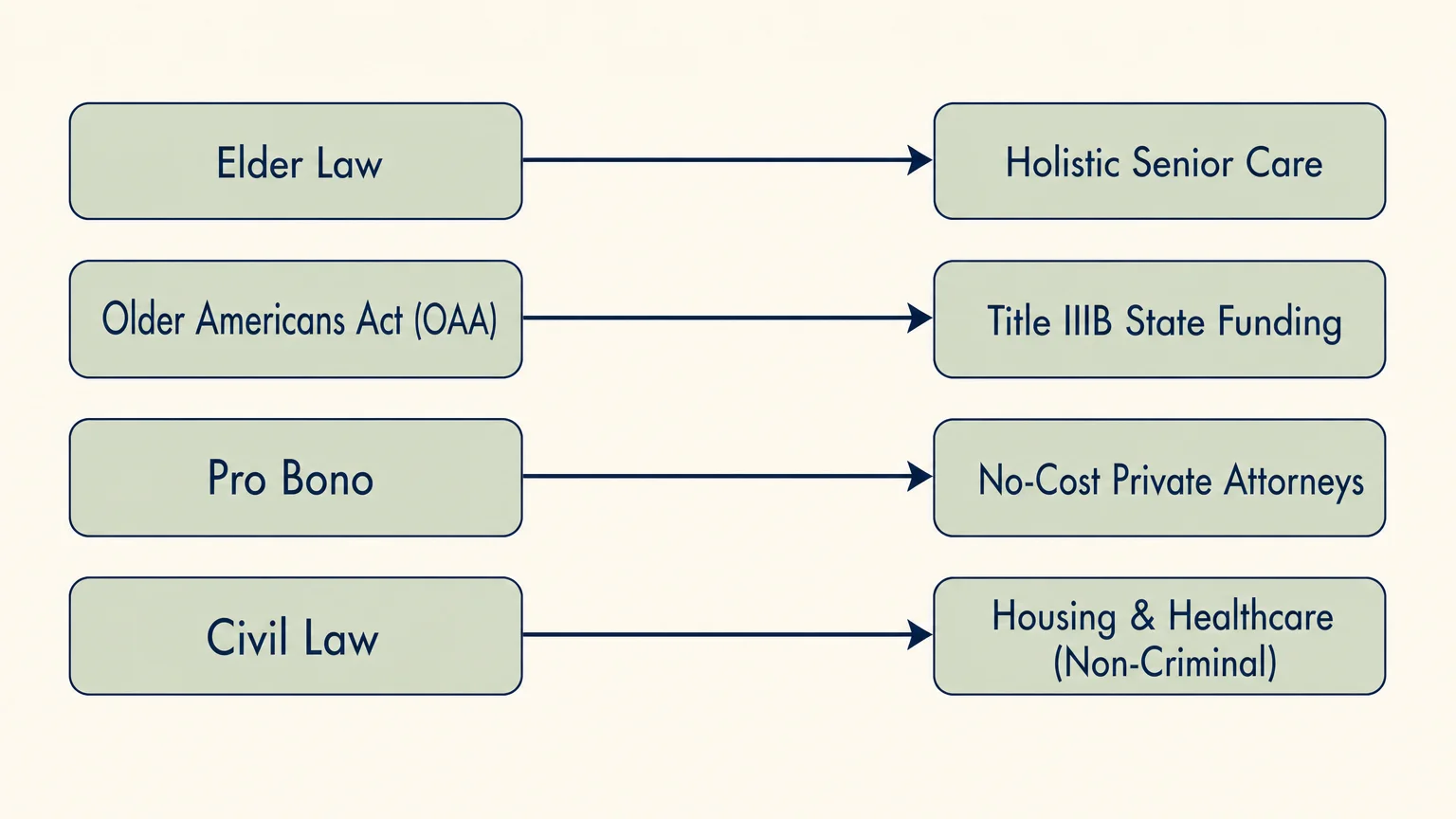
Elder Law is a specialized field of legal practice focusing on the complex issues that uniquely affect older adults. Practitioners in this field handle matters related to long-term care planning, guardianship, retirement benefits, healthcare coverage, and the prevention of elder abuse. Rather than focusing on a single type of law—such as solely practicing real estate or family law—elder law attorneys take a holistic approach to the physical, financial, and legal well-being of seniors.
Legal Aid for Seniors refers to non-profit organizations and government-funded agencies that provide free legal representation, advice, and education to older adults. These services primarily target individuals who cannot afford private attorneys, though many senior-specific programs do not strictly require you to be low-income to receive assistance.
The Older Americans Act (OAA) is a critical piece of federal legislation passed in 1965 designed to support seniors. Specifically, Title IIIB of this act requires every state to allocate funding for legal assistance directed at individuals aged 60 and older. This mandate ensures that regardless of where you live in the United States, there is a mechanism in place to provide you with basic legal support regarding your fundamental rights, shelter, and income.
Pro Bono is a Latin phrase meaning “for the public good.” In the legal profession, it refers to services rendered by private attorneys at no cost to the client. State bar associations actively encourage lawyers to take on pro bono cases every year. When you receive pro bono assistance, you get the same level of professional expertise as a paying client, but the lawyer waives their fee to support the community.
Civil Law versus Criminal Law is a vital distinction when seeking free assistance. Criminal law involves the government prosecuting someone for breaking the law. If you are accused of a crime, you have a constitutional right to a public defender. Civil law handles disputes between private parties, organizations, or government agencies—such as fighting an eviction, disputing a denied medical claim, or suing a fraudulent contractor. Legal aid for seniors almost exclusively handles civil legal matters; they do not provide defense for criminal charges.
Means Testing is an evaluation process used by many organizations to determine if you qualify for their services based on your income and assets. An agency might require your household income to fall below a certain percentage of the federal poverty line to offer you free representation. However, thanks to the Older Americans Act, many senior assistance programs bypass traditional means testing, prioritizing clients based on their level of social or economic need rather than strict financial cutoffs.
Advance Directives are legal documents that allow you to spell out your decisions about end-of-life care ahead of time. They give you a way to tell your family, friends, and healthcare professionals your wishes to avoid confusion later. The two most common types are a living will—which specifies the medical treatments you would or would not want—and a durable power of attorney for healthcare, which designates someone you trust to make medical decisions on your behalf if you become incapacitated. Helping seniors draft these documents is a core service provided by free legal clinics.



2 thoughts on “Free Legal Services Available to Seniors in Every State”
I haven’t told by legal aid by the Suffolk County bar Association by national law services that they will not assist me in my tenant I have over 40 police reports I have a refrain from order protection. He threatened to kill me. He’s tried to break into my home and I can’t get anybody to represent me. He harasses me every day and now every word that comes out of his mouth as he’s going to sue me
I would like to draft a lease in order to rent a room in my house along with renting out my one car garage. Can you send me an example draft that I could customize for me.