
Key Concepts and Terminology Explained
Before diving into the specific legal documents seniors need, you should understand the fundamental vocabulary used by financial advisors and attorneys. Legal jargon often intimidates people, but breaking these terms down reveals practical, everyday concepts.
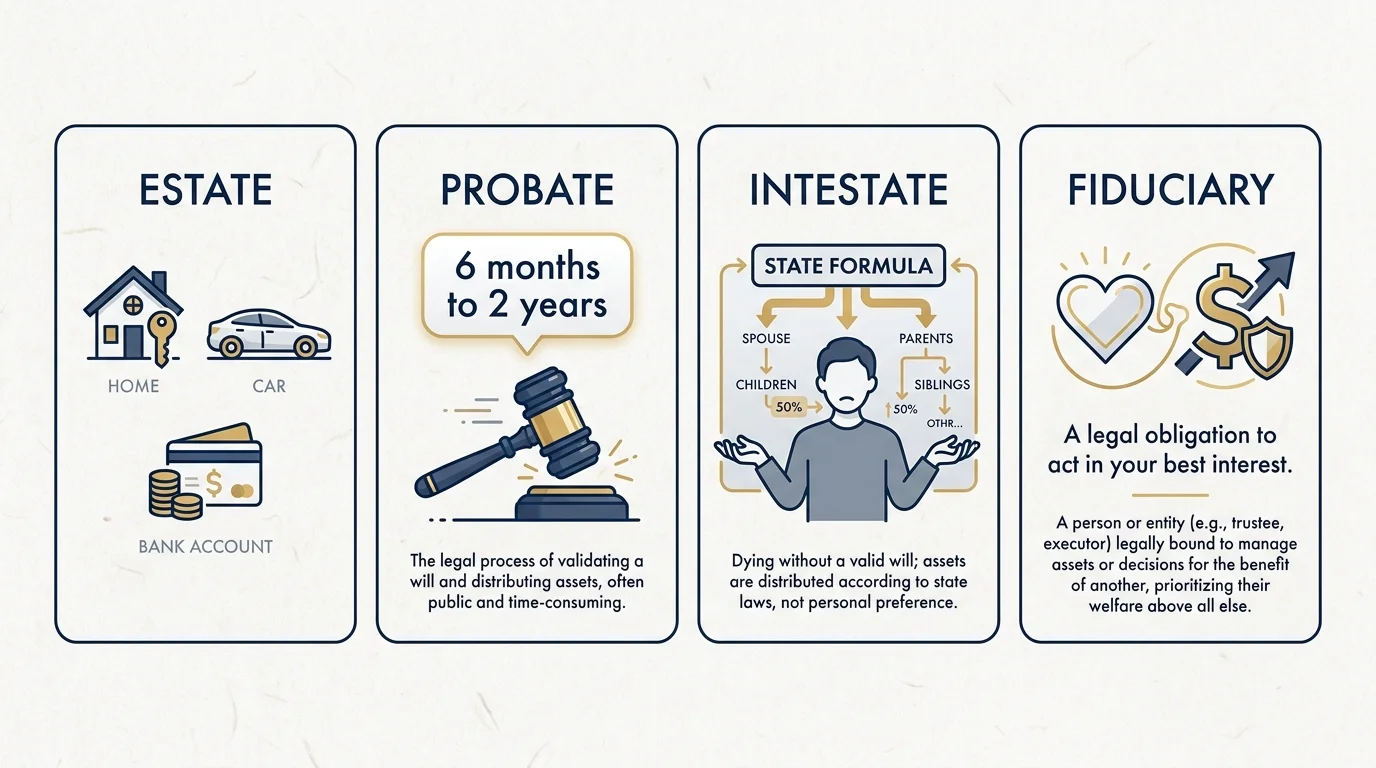
Estate: Your estate is simply everything you own. It includes your home, your car, your checking and savings accounts, your retirement accounts, and even your personal belongings like jewelry and family heirlooms. It also encompasses your liabilities, meaning any debts you owe at the time of your passing.
Probate: Probate is the formal, court-supervised legal process of authenticating your will, paying your final debts, and distributing your remaining assets. Probate is a matter of public record; anyone can look up the details of your estate. More importantly, probate takes time—often anywhere from six months to two years—and consumes a significant portion of your estate’s value through court fees, appraiser fees, and attorney costs. Many strategic financial plans focus specifically on avoiding probate to preserve wealth.
Intestate: If you pass away without a valid will, you die “intestate.” When this happens, state law determines exactly who receives your assets. The state’s formula follows a rigid hierarchy of blood relatives, entirely ignoring your personal relationships, charitable desires, or unmarried partners.
Fiduciary: A fiduciary is a person or organization legally obligated to act in your best financial and personal interest. When you appoint someone to manage your money or execute your will, they take on a fiduciary duty. They cannot mix your funds with their own or make decisions that benefit them at your expense.
Beneficiary: A beneficiary is an individual or entity you name to receive a specific asset after you pass away. You name beneficiaries in your will, but you also name them directly on life insurance policies, retirement accounts like IRAs and 401(k)s, and certain bank accounts. Understanding how beneficiary designations work is a critical component of personal finance, as these designations typically override whatever is written in your will.
Agent or Proxy: This is the person you grant legal authority to act on your behalf through a power of attorney. Your agent steps into your shoes to make medical or financial decisions when you cannot make them yourself.