
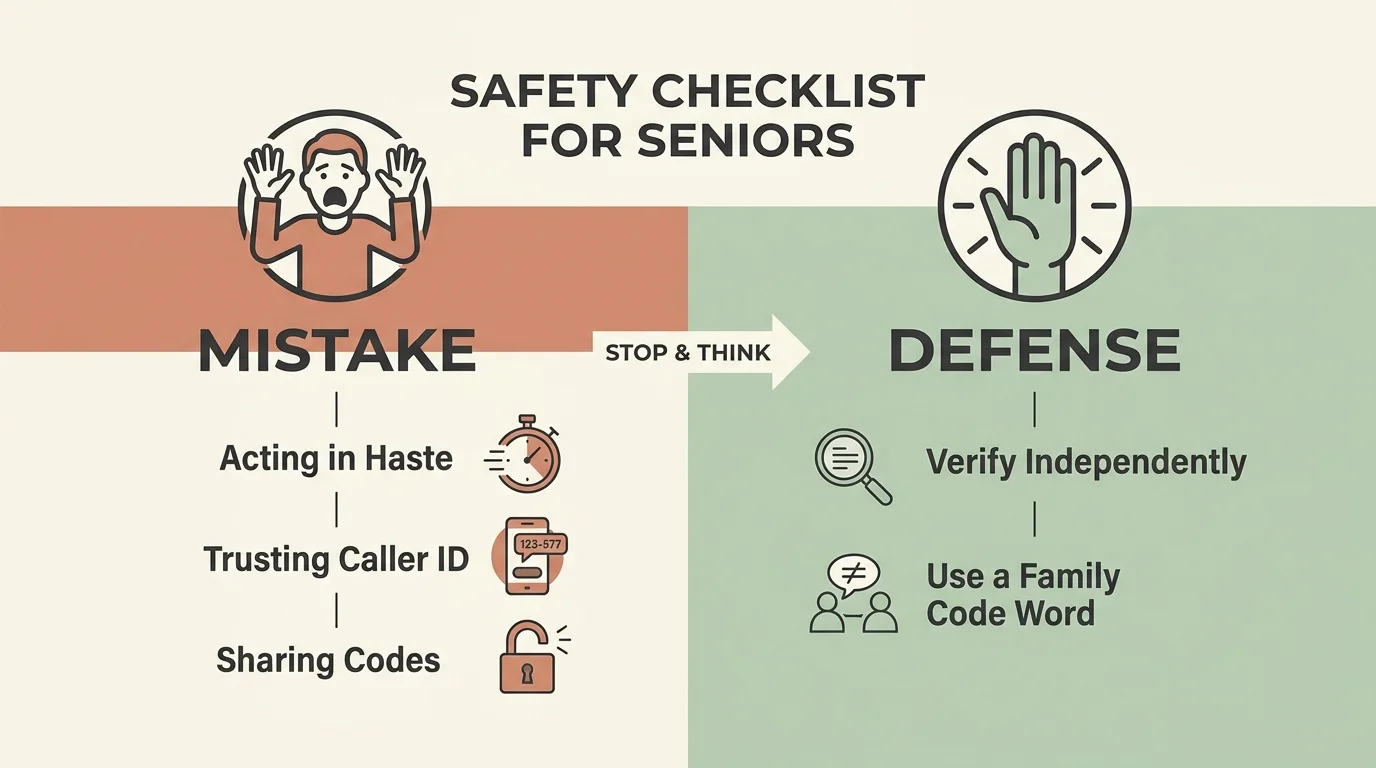
Common Mistakes and How to Avoid Them
Falling victim to a scam does not reflect a lack of intelligence; these operations are designed by psychological experts who systematically dismantle your critical thinking. However, several behavioral patterns consistently make seniors more vulnerable to these sophisticated attacks. By acknowledging and modifying these behaviors, you drastically reduce your risk profile.
Relying on Caller ID for Verification: As established earlier, caller ID spoofing is rampant. The mistake occurs when you use the name on the screen to let your guard down. If the screen says “Internal Revenue Service,” your brain instantly prepares to speak to a government agent. You must train yourself to ignore caller ID entirely. Let unknown calls go to voicemail. If you answer and the person claims to represent a bank or agency, hang up and call the organization back using the verified number listed on the back of your debit card or your official billing statement.
Keeping Communications a Secret: Isolation is a scammer’s most powerful weapon. Criminals explicitly instruct you not to tell your spouse, your adult children, or your bank teller about the transaction. They create elaborate narratives about how bank tellers are involved in the fraud, or how telling a family member will put them in legal danger. This enforced secrecy prevents rational third parties from intervening. Break the silence immediately. If someone tells you to keep a financial transaction a secret, you are being scammed. Call a trusted family member or an attorney immediately.
Believing Bank Warnings are Part of a “Cover-Up”: Scammers anticipate that bank tellers will try to stop you from withdrawing large sums of cash. To counter this, the scammer coaches you on exactly what to say at the bank. They might tell you to lie and say the money is for home renovations, or they might convince you that the bank manager is under federal investigation. When bank employees warn you that you might be the victim of fraud against seniors, listen to them. They are trained to spot these exact patterns and are trying to protect your money.
Acting on Manufactured Urgency: Every scam relies on extreme urgency. The criminal creates a scenario where you must act within the next hour, or you will lose all your money, face arrest, or a loved one will go to jail. This artificial time crunch prevents you from verifying their claims. You must recognize urgency as the ultimate red flag. Take a breath, step away from the phone or computer, and give yourself twenty-four hours to assess the situation. A legitimate crisis can withstand a few hours of verification.