
Common Mistakes and How to Avoid Them
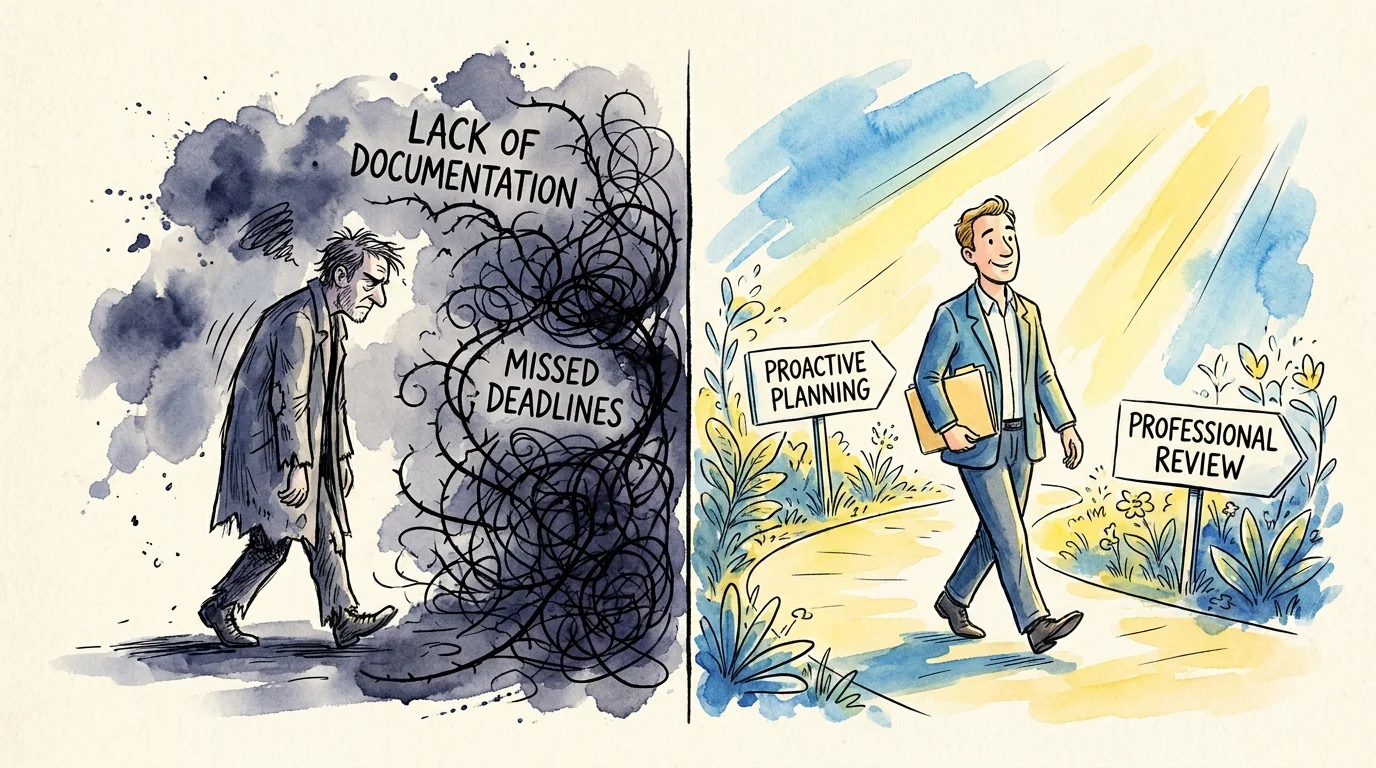
While the legal tips outlined above are incredibly useful, executing them incorrectly can trigger severe financial penalties. The tax code demands precision, and regular Americans often stumble into traps when attempting to manage complex legal strategies without adequate preparation.
A major pitfall occurs with the Backdoor Roth IRA through the “Pro-Rata Rule.” If you hold other Traditional IRAs with pre-tax money in them, the IRS will not let you simply convert new, non-deductible money into a Roth IRA tax-free. They force you to calculate the ratio of pre-tax to after-tax money across all your IRA accounts and tax your conversion proportionally. You can avoid this by rolling existing pre-tax IRAs into an employer-sponsored 401(k) before attempting a backdoor conversion, isolating the accounts and keeping the conversion tax-free.
When utilizing tax-loss harvesting, investors frequently run afoul of the “Wash-Sale Rule.” The IRS prevents you from claiming a capital loss if you sell a security at a loss and then buy a “substantially identical” security within 30 days before or after the sale. If you sell an S&P 500 index fund at a loss, you cannot immediately buy the exact same fund back the next day. You must wait 31 days or purchase a sufficiently different investment to maintain market exposure while keeping your tax deduction valid.
Regarding the Augusta Rule, poor documentation ruins the exemption. If your business rents your home, you must treat the transaction like a formal business dealing. You need a written lease agreement, an invoice, and documented proof that the rent you charged matches local market rates for similar commercial venues. If you charge your business an exorbitant amount just to drain untaxed money from the company, the IRS will reclassify the payment as taxable dividends and hit you with penalties.
Finally, procrastination destroys Medicaid planning. Families often wait until a parent shows signs of cognitive decline or severe illness before establishing an irrevocable trust. Because of the strict five-year look-back period, funding a trust too late leaves the family fully exposed to nursing home costs. You must establish and fund these asset protection vehicles while you are still healthy and independent.