
A Practical Guide to Legal Protection for Seniors in Florida
Florida legislature has developed comprehensive systems to shield older adults from physical harm, financial ruin, and institutional neglect. Understanding how to utilize these laws ensures you maintain control over your life and assets.
Florida Elder Abuse Laws and Adult Protective Services
Florida’s Adult Protective Services Act (Chapter 415 of the Florida Statutes) establishes a stringent framework for identifying and stopping elder abuse. The law categorizes mistreatment into three main areas: abuse, neglect, and exploitation. Abuse involves intentional acts causing physical or psychological harm; neglect occurs when a caregiver fails to provide necessary food, clothing, medicine, or supervision; and exploitation targets the senior’s financial assets.
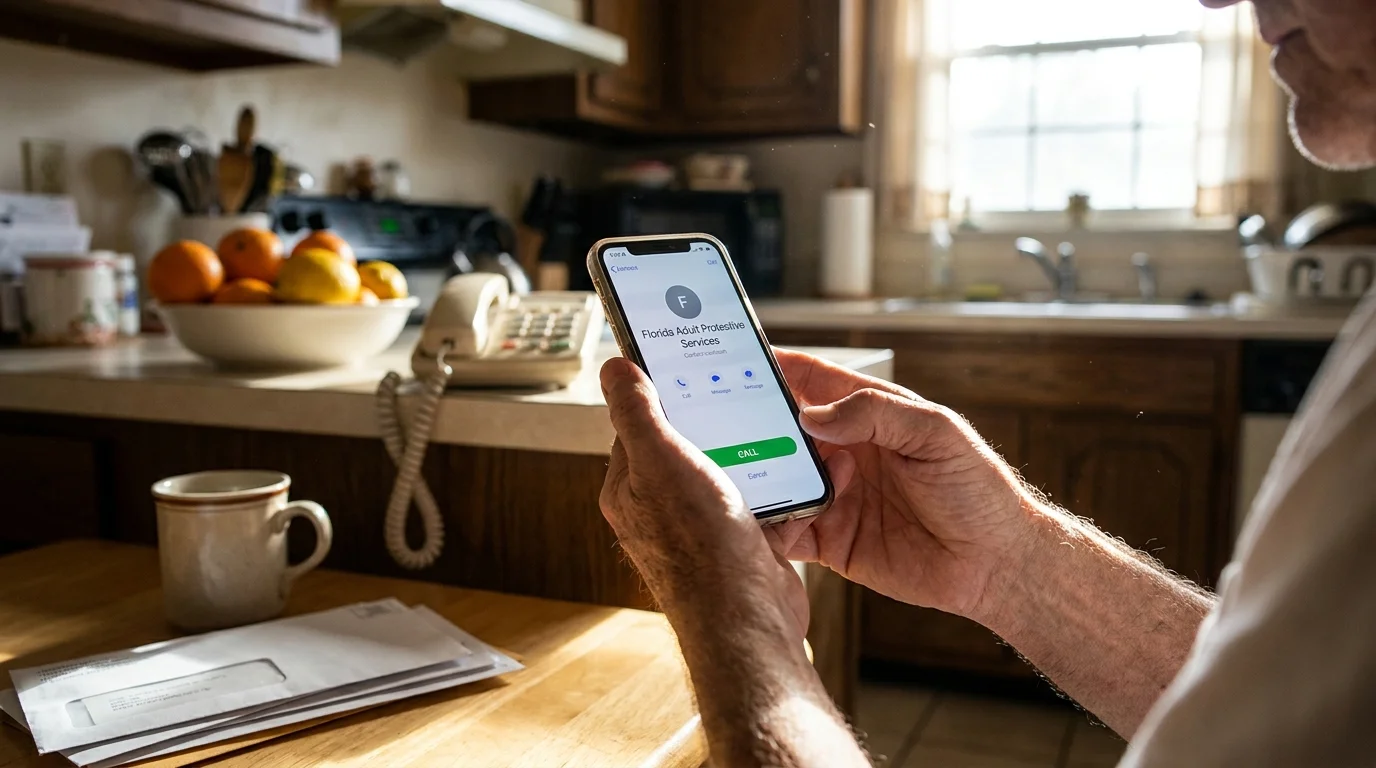
To enforce these protections, Florida mandates that any person who knows or has reasonable cause to suspect that a vulnerable adult has been or is being abused, neglected, or exploited must report the information to the Florida Abuse Hotline. Certain professionals—such as doctors, nurses, bank employees, and law enforcement officers—act as mandatory reporters; however, regular citizens also carry the moral and legal responsibility to report suspicious activities.
If you or someone you love faces exploitation, Florida law provides a rapid legal remedy: the Injunction for Protection Against Exploitation of a Vulnerable Adult (Section 825.1035). This civil tool allows you, a family member, or law enforcement to ask a judge to immediately freeze the senior’s assets and lines of credit. This injunction prevents the exploiter from draining bank accounts while authorities investigate the claims. It requires no criminal charges to be filed first, making it a highly effective, immediate stopgap against financial predators.
Nursing Home and Assisted Living Facility Residents’ Rights
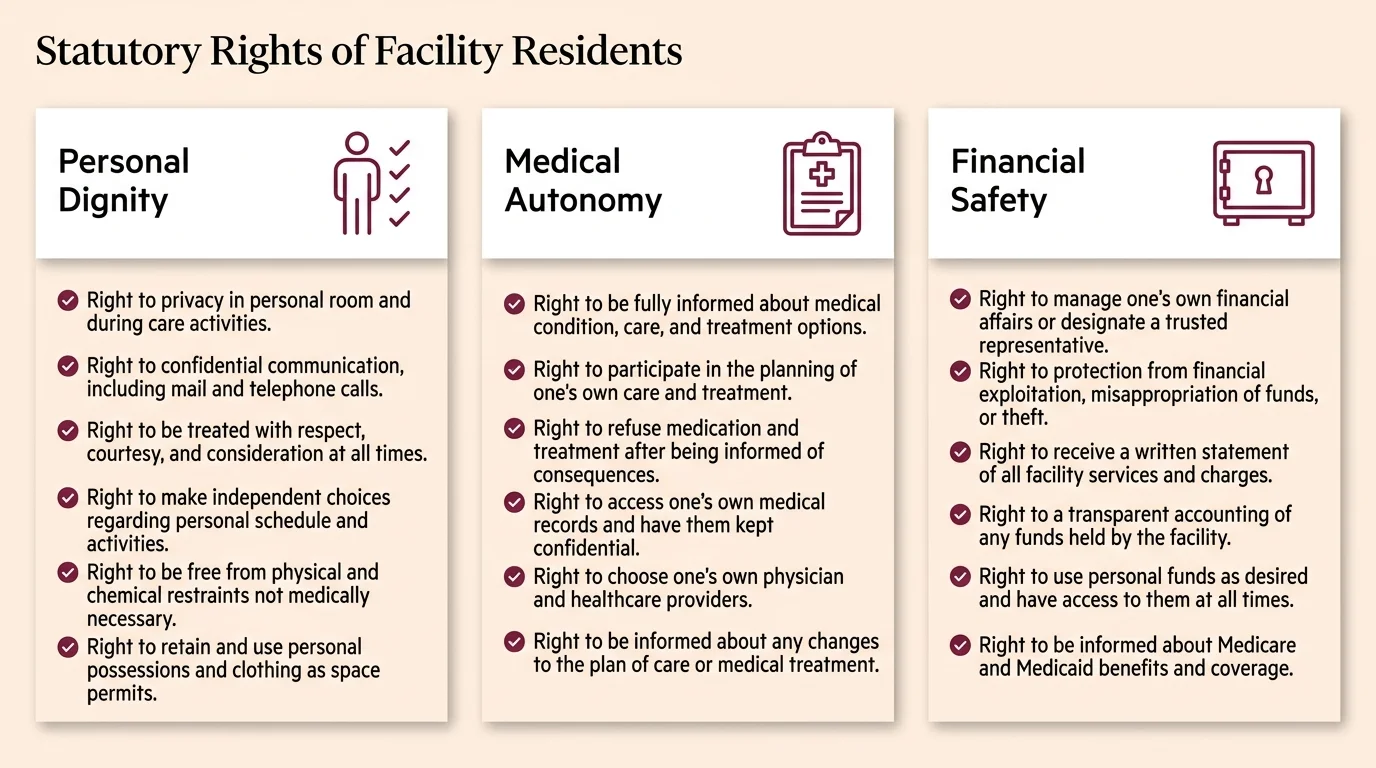
Moving into a long-term care facility does not strip you of your civil liberties. The Florida Nursing Home Residents’ Rights Act (Section 400.022) guarantees that individuals living in these facilities maintain their dignity, privacy, and autonomy. Facilities must provide a written copy of these rights upon admission.
Under this statute, you hold the right to adequate and appropriate healthcare, chosen in consultation with your own physician. You possess the right to communicate privately with persons of your choice, including the right to receive or refuse visitors. Furthermore, you retain the right to manage your own financial affairs; a nursing home cannot force you to deposit your personal funds with the facility.
Crucially, the law protects you against arbitrary discharge. A facility cannot simply evict you without cause. They must provide at least 30 days’ written notice of any transfer or discharge, alongside a legitimate medical or financial reason—such as the facility no longer being able to meet your medical needs, or non-payment after reasonable notice. You also hold the right to appeal this discharge to the State of Florida. If you encounter poor treatment, you have the absolute right to present grievances without fear of retaliation, and you may contact the Florida Long-Term Care Ombudsman Program, an independent advocacy group that investigates facility complaints on behalf of residents.

Financial Exploitation and Consumer Fraud Protections
Scammers aggressively target older adults, utilizing deceptive telemarketing, fake investment schemes, and fraudulent home repair services. To combat this, the state enforces the Florida Deceptive and Unfair Trade Practices Act (FDUTPA). This law outlaws unfair methods of competition, unconscionable acts, and deceptive practices in the conduct of any trade or commerce.
Recognizing the unique vulnerability of older citizens, Florida law enhances the penalties for consumer fraud when the victim is a senior. Under Section 501.2077 of the Florida Statutes, any person or business who willfully uses a deceptive trade practice against a senior citizen faces severe civil penalties—up to $15,000 per violation, in addition to any other penalties established by law. This serves as a powerful deterrent against contractors who overcharge older homeowners or telemarketers selling fraudulent medical devices.
You can proactively protect yourself by registering your phone numbers with the Florida Do Not Call list and placing security freezes on your credit reports with Equifax, Experian, and TransUnion. If you hire someone for home repairs, demand a written contract, verify their state license through the Department of Business and Professional Regulation (DBPR), and never pay the full amount upfront.
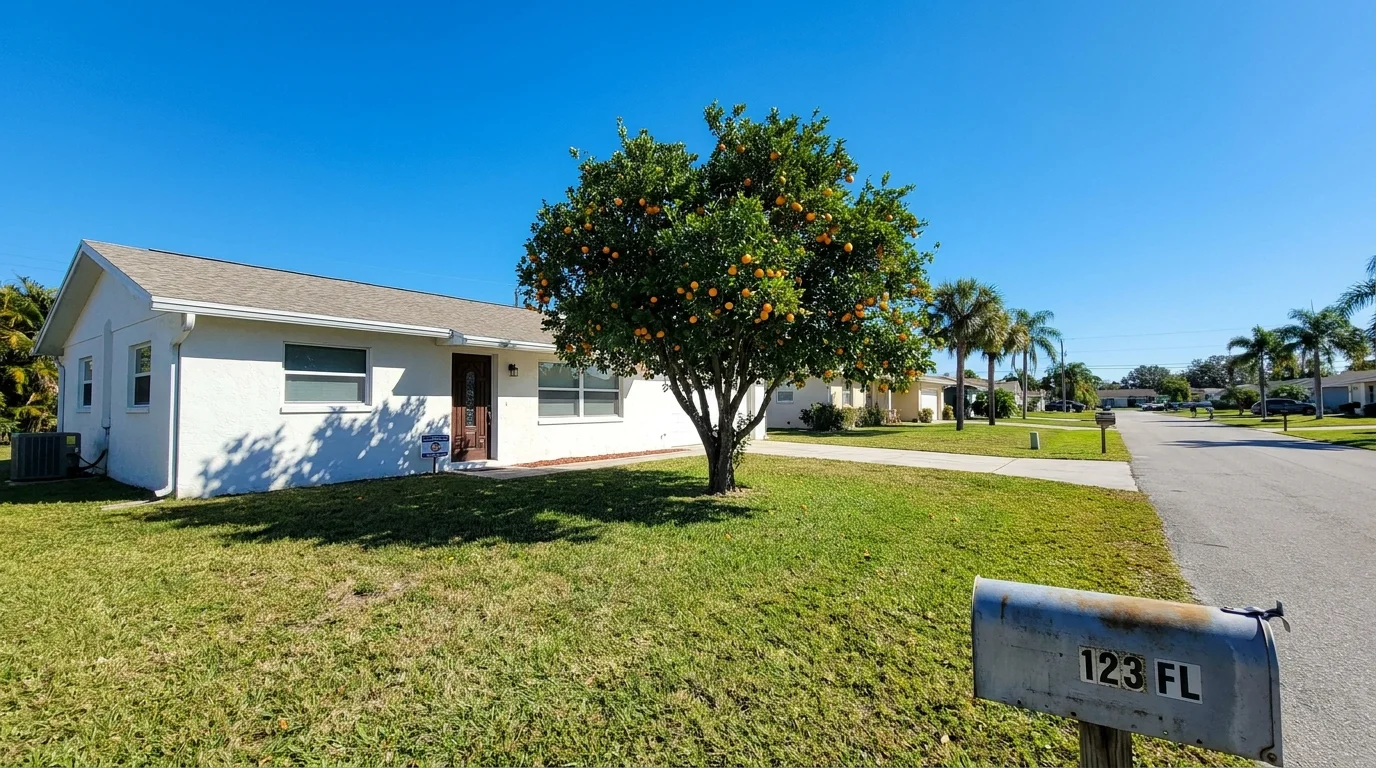
Senior Benefits Florida: Property Tax and Homestead Protections
Living on a fixed income presents significant economic challenges. Fortunately, Florida law provides specialized tax relief programs to ease this burden. The standard Florida Homestead Exemption reduces the assessed value of your primary residence by up to $50,000. However, many counties and municipalities offer an additional senior exemption under Section 196.075 of the Florida Statutes.
If you are 65 or older and your total household adjusted gross income falls below a statutory limit (adjusted annually by the Florida Department of Revenue), you may qualify for an additional homestead exemption of up to $50,000. In some specific jurisdictions, if your home’s just value is less than $250,000 and you have maintained it as your permanent residence for at least 25 years, the local government may waive your entire property tax liability.
To secure these benefits, you must act proactively. The state does not apply these exemptions automatically. You must submit the required application and income documentation to your county property appraiser’s office by March 1st of the tax year. Missing this deadline means forfeiting your tax savings for the entire year.