
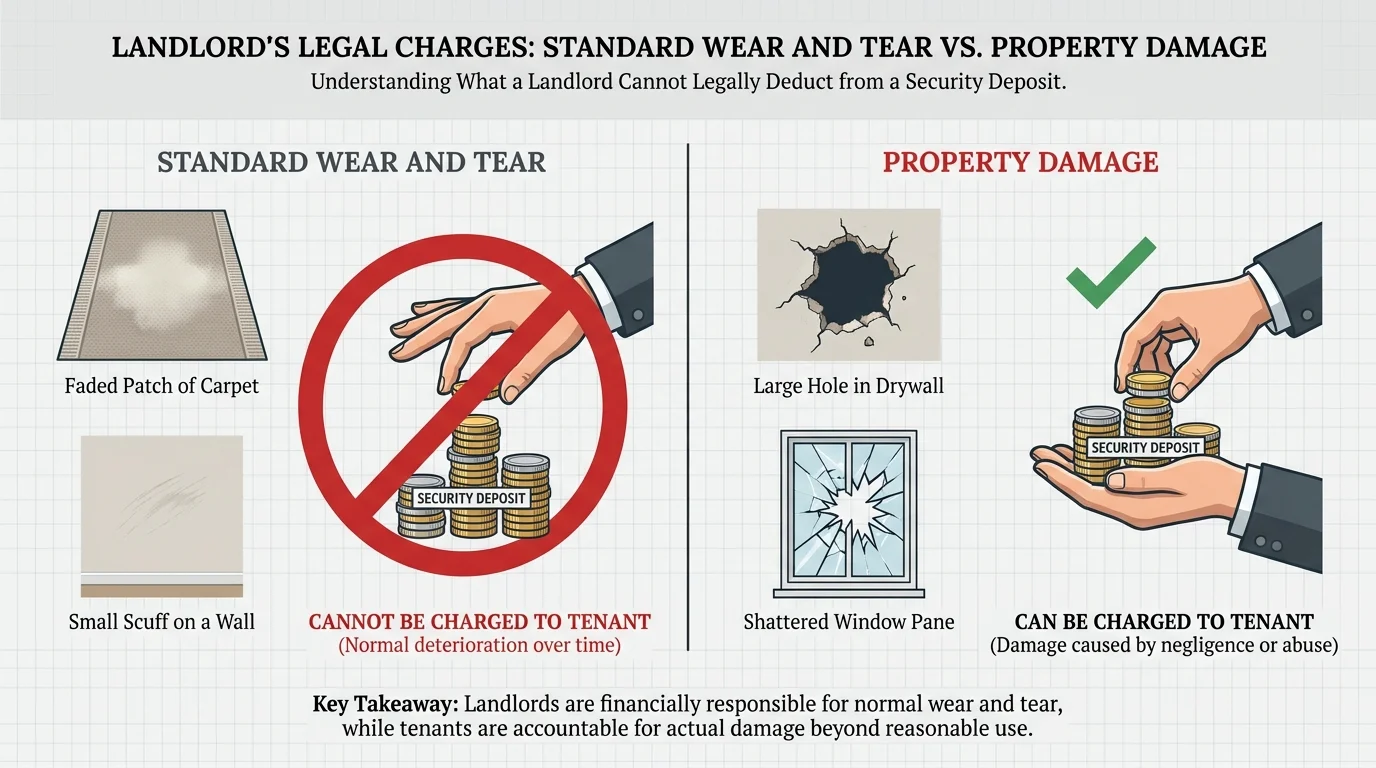
2. Keeping Security Deposits for Standard Wear and Tear
Security deposit theft stands as one of the most widespread financial abuses in the rental housing market. Landlords legally collect security deposits to protect themselves against unpaid rent or severe damage caused by a tenant’s negligence or abuse. They cannot use your security deposit to fund routine renovations or turn the unit over for the next renter.
State laws universally prohibit landlords from withholding deposit money to cover “normal wear and tear.” Normal wear and tear includes minor, unavoidable deterioration that happens when someone lives in a space. Examples include faded paint from sunlight, minor scuffs on baseboards, worn pathways in carpet, or loose door hinges. Conversely, actual damage includes large holes in the drywall, shattered windows, unauthorized paint jobs, or severe pet urine stains penetrating the subfloor.
Many landlords will deduct hundreds of dollars for “professional cleaning,” “carpet replacement,” or “repainting,” even when you left the unit spotless. To protect yourself, take extensive, well-lit photographs of every room, appliance, and surface on the day you move in and the day you move out. Request a preliminary walkthrough with your landlord two weeks before your lease ends to identify potential issues.
If a landlord illegally withholds your deposit, most states require them to provide an itemized list of deductions within 14 to 30 days. If they fail to meet this deadline, you may be entitled to sue for the full return of your deposit, plus statutory damages, in small claims court.





4 thoughts on “7 Ways Landlords Illegally Violate Tenant Rights That Most Renters Accept”
What are landlord/owner rights when squatters move in illegally?
They’re all money hungry slum lords!! I got mold in my basement for 5 years Ive asked to be fixed. A screen door broken Ive submitted 5 work orders on and the maintenance team is too stupid to fix it! A water leak it took them 5 years to find. It had to leak into another unit for them to finally send a plumber to fix it. But they raise my rent every year!
What protects a landlord from a renter who leaves a upstairs window open during the winter and freezes the heat pipe which burst and floods the floor and damage the main floor to an extent it cost $25,000 in damage and he doesn’t have a bank account and hides his cash so you can’t collect money for the damage.
Hello. I honestly feel that the management of my complex treats me unfairly. They never complete a work order and lies to me about every issue (and there are many) I bring up. I truly love my apartment and try not to confront them for fear of being evicted.