Key Concepts and Terminology Explained
The legal landscape is notoriously dense, filled with Latin phrases and archaic terminology that can easily overwhelm anyone outside the legal profession. To build a robust estate planning will, you must first understand the foundational vocabulary. When you grasp these core concepts, the entire process becomes logical and approachable.
The Testator
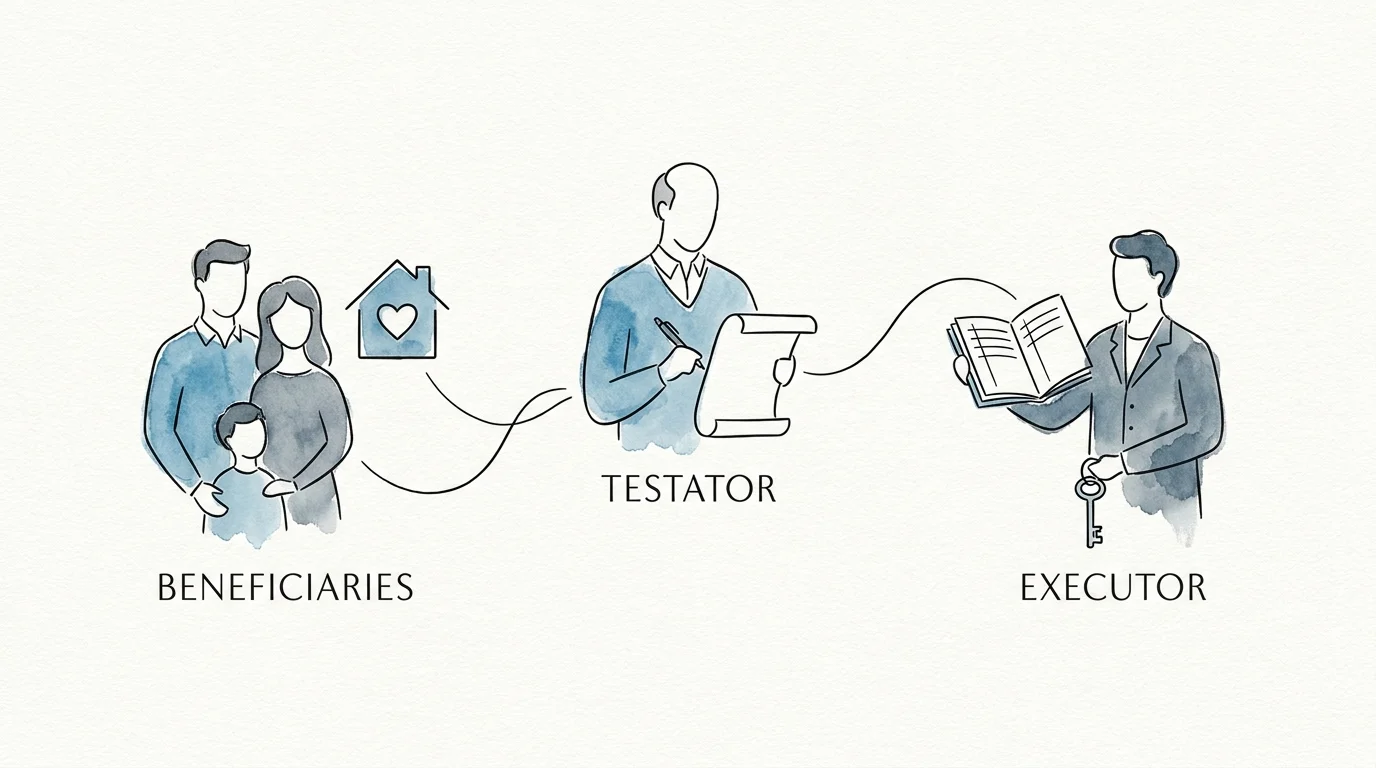
In legal terms, the testator is you—the person creating the will. As the testator, you hold the absolute right to determine how your assets are distributed upon your passing, provided you are of sound mind and acting without undue influence. Being of “sound mind” generally means you understand the nature of your assets, you recognize the people who would naturally inherit your property, and you comprehend the legal effect of signing the document.
The Executor
Your executor—sometimes referred to as a personal representative—is the individual you designate to carry out the instructions detailed in your will. This role requires diligence, organization, and a significant time commitment. The executor is responsible for locating your assets, paying off any outstanding debts or taxes, closing your accounts, and ultimately distributing the remaining property to your heirs. Choosing an executor is one of the most critical decisions you will make; you need someone trustworthy, financially responsible, and capable of navigating bureaucratic processes during an emotional time.
Beneficiaries and Heirs
A beneficiary is any person, organization, or charity explicitly named in your will to receive a portion of your estate. You can designate primary beneficiaries who are first in line to receive assets, as well as contingent beneficiaries who inherit only if the primary beneficiary passes away before you do. Establishing contingent beneficiaries is a vital step that prevents assets from falling back into the general estate if a tragedy occurs. Heirs, conversely, are the individuals legally entitled to inherit your property under state law if you die without a will.
Probate
A widespread misconception is that creating a will allows your estate to bypass the probate process entirely. In reality, a will is essentially an instruction manual for the probate court. Probate is the formal legal procedure during which a judge validates your will, authorizes your executor to act, and oversees the settling of the estate. While having a will does not eliminate probate, it heavily streamlines the process by providing the court with your explicit directives, thereby reducing the likelihood of familial disputes and legal gridlock.
Intestacy
If you pass away without a valid will, you are said to have died “intestate.” When this occurs, the probate court distributes your assets according to a rigid legislative formula specific to your state. State intestacy laws typically favor spouses and biological children, but they do not account for your personal relationships, estranged family members, or charitable inclinations. Dying intestate strips you of your voice and leaves your legacy entirely in the hands of the government.
Fiduciary Duty
Anyone acting on behalf of your estate—such as your executor or a trustee—is bound by a fiduciary duty. This is the highest standard of care recognized by law, requiring the individual to manage your assets purely for the benefit of your beneficiaries, completely avoiding any conflicts of interest or self-dealing. If an executor violates this duty, they can be held personally liable by the probate court.