Common Mistakes and How to Avoid Them
Legal mistakes regarding privacy rarely stem from malicious intent; they usually occur due to a misunderstanding of how the law applies to modern technology. Recognizing these common errors helps you avoid unnecessary litigation.
Sharing Recordings on Social Media
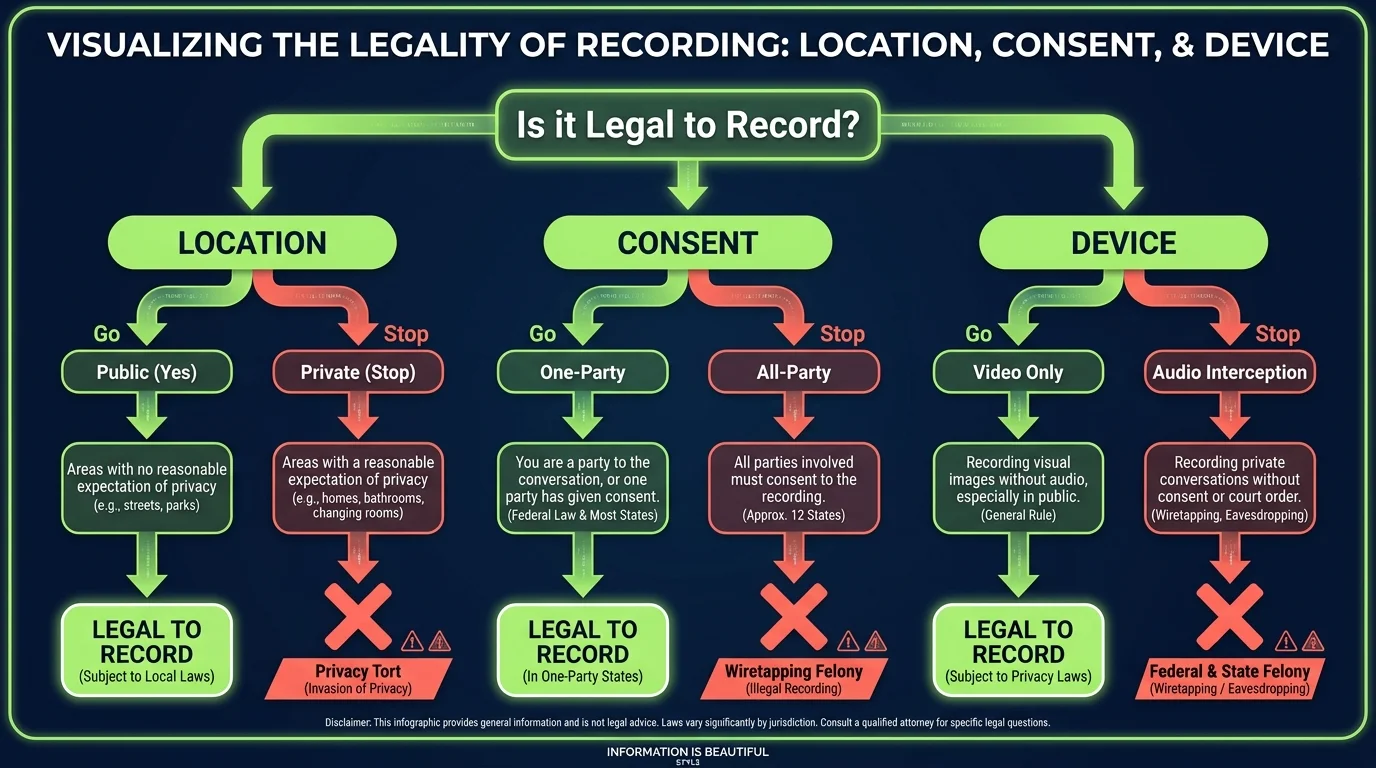
Many people believe that if they capture a frustrating interaction on video, posting it online to “expose” the other person serves as a form of justice. Social media amplifies your legal risk exponentially. Even if you legally recorded an event in public, maliciously posting it online with false context can result in a defamation lawsuit. If the video reveals highly sensitive, private facts about a person that hold no legitimate public concern, the recorded individual can sue you for the public disclosure of private facts. Avoid weaponizing your smartphone for internet clout.
Assuming Public Property Means Zero Privacy
Just because a building is open to the public does not mean you have an absolute right to record everywhere inside it. Public parks, municipal buildings, and retail stores contain specific zones where people retain a high expectation of privacy. Public restrooms, locker rooms, and changing areas remain strictly off-limits to any form of recording. Capturing images in these specific areas often constitutes a serious criminal offense, sometimes carrying mandatory registry consequences depending on the context.
Believing a Simple Sign Equals Blanket Consent
Business owners sometimes hang a generic “Premises under video surveillance” sign and assume they hold absolute protection from privacy lawsuits. While signs provide essential notice, they do not grant unlimited rights to capture audio. A sign warning of security cameras rarely covers the interception of verbal conversations. Furthermore, a sign does not legally justify pointing a camera into areas where customers explicitly expect privacy.