Common Mistakes and How to Avoid Them
Even with the best intentions, seniors frequently make subtle errors in their estate planning that can lead to disastrous consequences for their families. Identifying these common pitfalls helps you bulletproof your last will testament seniors can rely on with total confidence.
Relying on Verbal Promises
A tragic mistake is assuming your family will simply follow your verbal instructions after you are gone. Telling your oldest son that he should take the vintage car, or telling your daughter she gets the family silver, holds zero legal weight in a probate court. If these wishes are not explicitly written into your legally executed will, the executor is bound to distribute the assets equally or sell them to divide the cash. Verbal promises only breed resentment and family conflict when they inevitably clash with the legal documentation.
Ignoring the Concept of Ademption
Ademption occurs when you leave a specific asset to a beneficiary in your will, but you no longer own that asset at the time of your death. For example, if your will states, “I leave my cabin by the lake to my nephew,” but you sold the cabin five years before your passing to pay for medical care, your nephew receives nothing to replace it. To avoid ademption, include alternative language, such as providing a cash equivalent if the specific property is no longer part of your estate.
Overlooking Beneficiary Designations on Financial Accounts
Many people do not realize that certain assets pass entirely outside of the will. Life insurance policies, 401(k)s, IRAs, and bank accounts with “Payable on Death” (POD) designations go directly to the person named on the account form, overriding anything written in your will. If your will leaves your entire estate to your current spouse, but your life insurance policy still lists your ex-spouse as the beneficiary because you forgot to update the paperwork twenty years ago, your ex-spouse will receive the insurance payout. You must audit these beneficiary designations regularly to ensure they align perfectly with your broader estate plan.
Attempting DIY Estate Planning Without Oversight
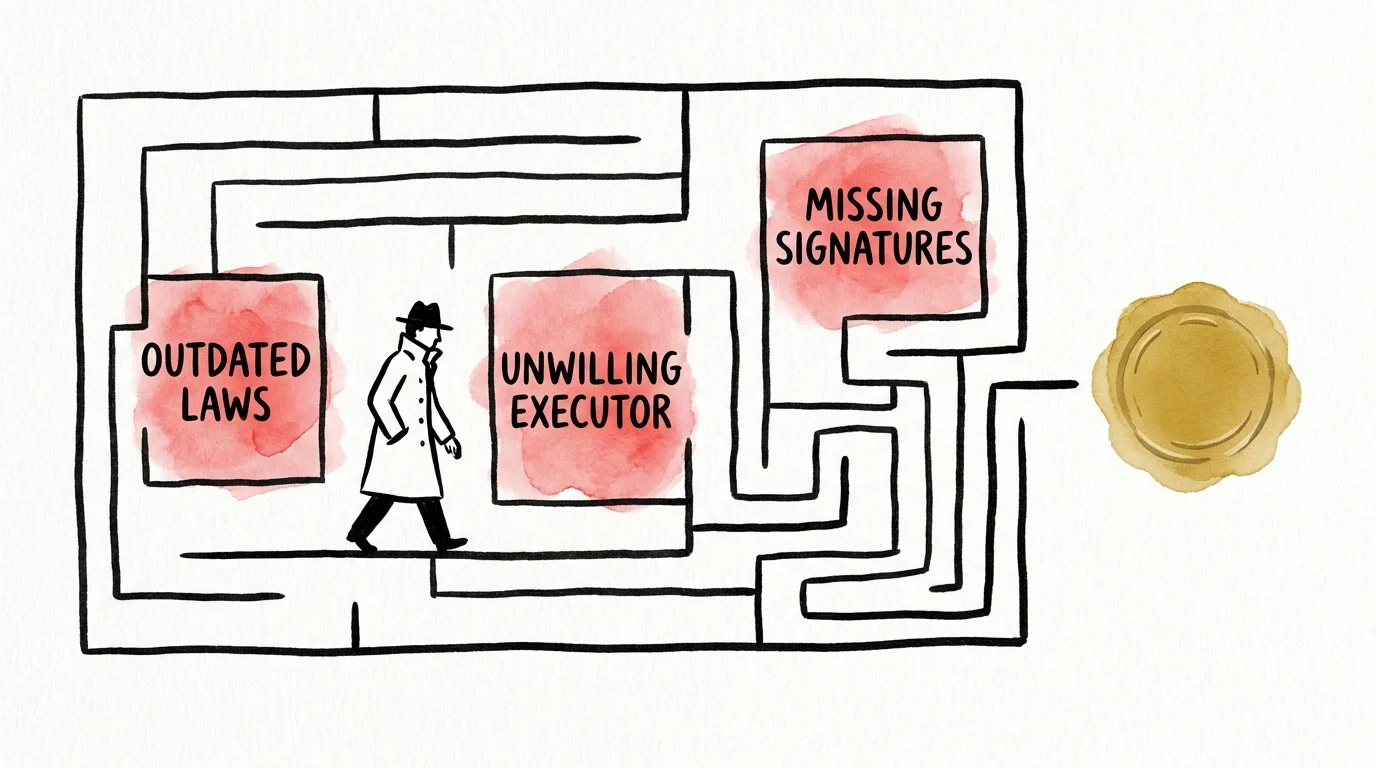
The internet is flooded with cheap, fill-in-the-blank legal forms. While these templates might suffice for a younger person with minimal assets, they are highly risky for seniors with complex family structures, real estate holdings, or substantial retirement accounts. Generic forms frequently fail to account for state-specific probate laws or lack the necessary language to properly establish trusts. A small typographical error or an improper witness signature on a DIY form can invalidate the entire document, throwing your estate into intestacy.