
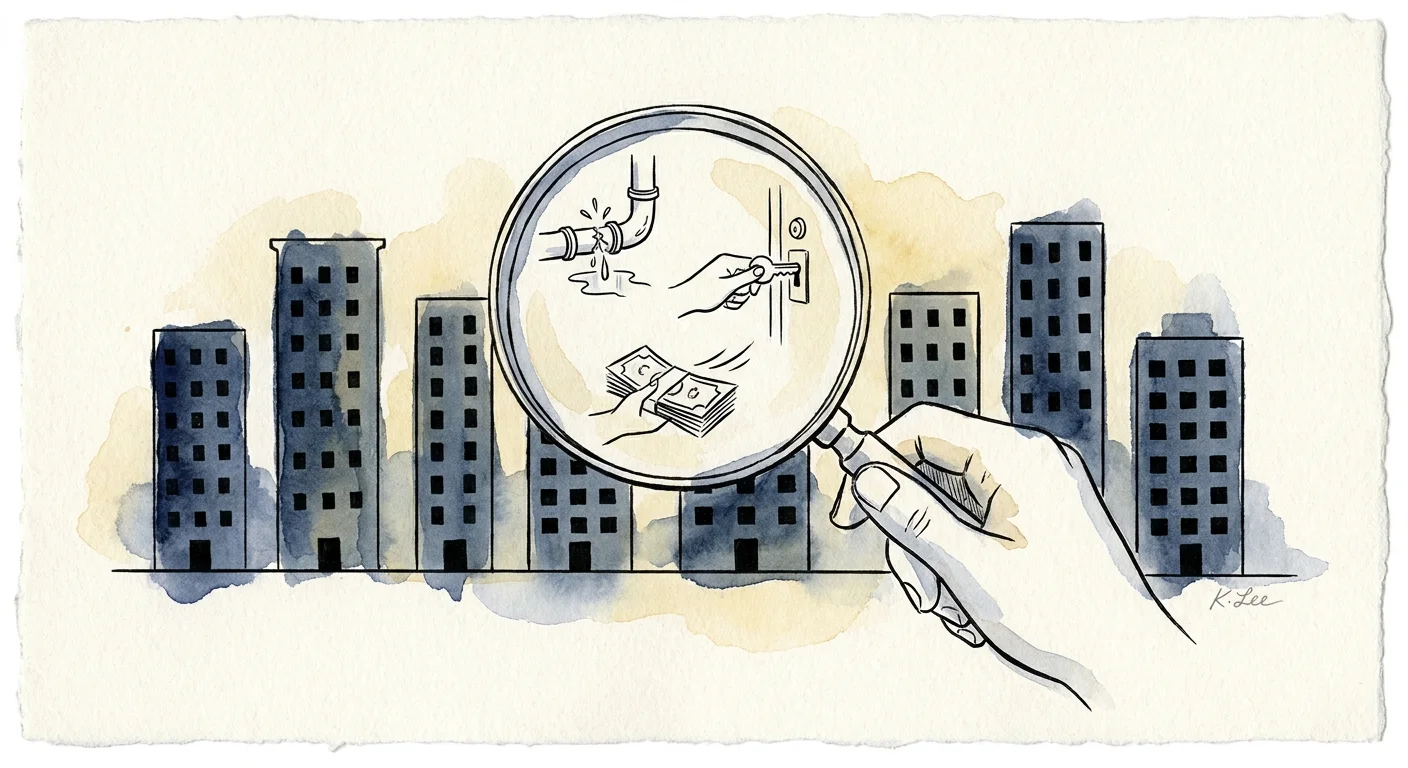
 A magnifying glass reveals leaking pipes and illegal entries hidden within a row of city apartment buildings.
Many renters unknowingly tolerate lease conditions and property management tactics that explicitly break state and local housing laws. Understanding exactly how landlords violate tenant rights illegally gives you the leverage to protect your home, your privacy, and your financial security.
You possess specific legal protections that a lease agreement cannot simply erase or overwrite. Unfortunately, illegal landlord actions renters accept often stem from a lack of awareness rather than a lack of remedies.
By recognizing these hidden violations—ranging from unannounced entries to unwarranted security deposit deductions—you can push back against exploitation and ensure your living situation remains safe and fair.
Learn to identify the boundaries of landlord authority and reclaim the rights guaranteed to you as a tenant.


10 thoughts on “7 Ways Landlords Illegally Violate Tenant Rights That Most Renters Accept”
What are landlord/owner rights when squatters move in illegally?
They’re all money hungry slum lords!! I got mold in my basement for 5 years Ive asked to be fixed. A screen door broken Ive submitted 5 work orders on and the maintenance team is too stupid to fix it! A water leak it took them 5 years to find. It had to leak into another unit for them to finally send a plumber to fix it. But they raise my rent every year!
What protects a landlord from a renter who leaves a upstairs window open during the winter and freezes the heat pipe which burst and floods the floor and damage the main floor to an extent it cost $25,000 in damage and he doesn’t have a bank account and hides his cash so you can’t collect money for the damage.
NOTHING!! Absolutely Nothing happens! Especially small landlords. I had similar situation and on top of destroying the property , I also wasn’t paid rent for 1 1/2 years !
You may pay your landlord but there is absolutely no way they have access to your checking or savings accounts unless you’ve granted it. If you have a monthly draft for set amount that is all they are allowed. If something else is allowed by your bank you need to go to them and fix immediately. I would also stop the automatic draft and go back to Bill Pay eliminating the draft function.
Hello. I honestly feel that the management of my complex treats me unfairly. They never complete a work order and lies to me about every issue (and there are many) I bring up. I truly love my apartment and try not to confront them for fear of being evicted.
one thing you did not mention on the landlord coming into the property. When changing an appliance that uses gas the gas has to be shut off, sometimes. If so then pilot light within the apartment or house may have a gas applaince that has to have pilot lights relit. To leave the gas escaping into the wall, underneeth the house or into the unit is an explosion hazard.
Hi when paying cash for your rent and most likely the owner is not paying taxes on the apts, how can one find out if it’s really done?
They are several Management companies in Copperas Cove TX. They are slum lords. I have been charged a 250.00 for a major tree trimming. They took over 2 months to fix a leak. The apt now has black mold and they are rerenting it as is.
With all the tenant rights and NO landlord rights, is there any other reason that landowners are selling their properties or leaving them unoccupied? There’s a reason that we have a shortage of housing, and this is a big one. The legal system is totally on the tenant’s side no matter what. A landlord is not going to evict a tenant w/o good reason. There is ALOT of work to be done between tenants. Cleaning, carpet shampoos, painting, repairs, administrative work as in advertising, verifying references, showing the property, screening new tenants, etc. ALL, very time consuming. Now, why would a landlord want to go thru all that work if it wasn’t totally necessary? I’ve had tenants move in 6 additional people and 2 unauthorized dogs into my 2 bedroom house next door to me. There were already 4 occupants in the house. They dogs were allowed by law to run free among the adjoining properties b/c of no fence separating the properties. They would charge after us every time we went out of our house. We were told by police that we could not harm the dogs, unless they drew blood. Really? Always late on rent, (I have bills to pay too) ran up an $1100 electric bill on me, that all utilities are inc w/ the rent. She was deliberately leaving all the windows open w/ the heat running in the winter, in retaliation for me trying to evict her. Now why would I want to get rid of a gem like her? It still took me 6 months, thru the courts to get her out. Those 6 months w/o rent. YES, I chose to not rent again and sold the place. People like that just make it harder for good people to find decent housing. Sorry, but there is going to be a lot less available housing b/c of the law rewarding these sorry a$$ people to live rent free and causing havoc.